
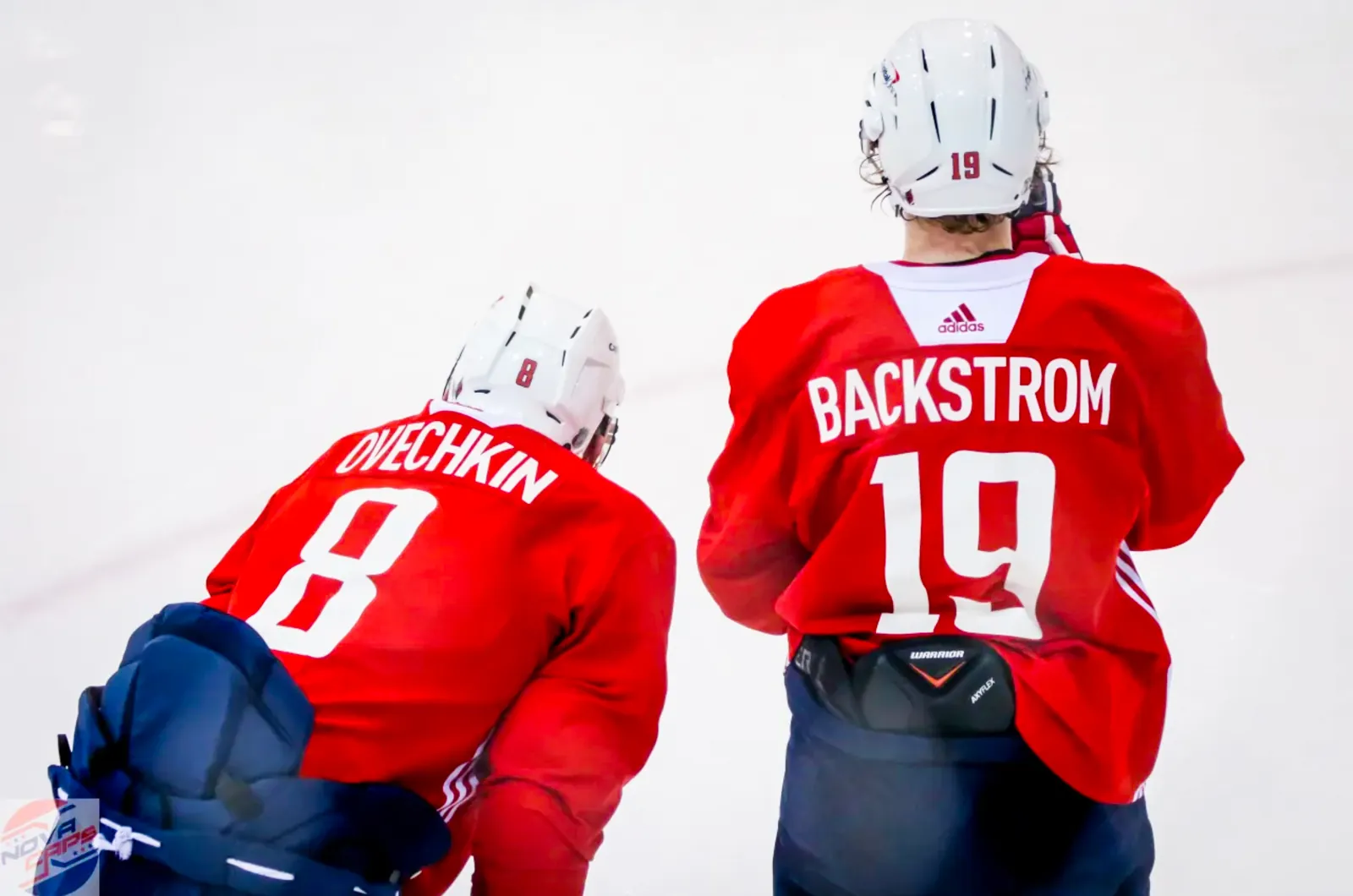
Washington Capitals head coach Peter Laviolette regularly receives a ton of heat from fans for his continuous juggling of the Capitals forward lines. It seems the changes come before each and every game.
While a lot can be said for keeping lines constant in order for linemates to develop chemistry, the fact of the matter is Laviolette is running tests in order to see what works and what doesn’t work, particularly during the early part of the season.
However, with just 24 games remaining in the regular season, and the Capitals fighting for a playoff spot, the time to lock-in on line combinations is now. Unfortunately, the Capitals are still dealing with injuries and players returning to the lineup with just a few games under their belts, which have not been tested in certain line combinations, so “testing” will likely continue.
Regardless of when Laviolette decides to lock-in on line combinations, it’s helpful to take a look at what has been “tested” to date, and how each of the Capitals line deployments has performed after the first 58 games of the season.
ALL LINE COMBINATIONS DEPLOYED TO DATE
The following graph plots the performance for each and every one of the 101 total forward line combination deployed by the Capitals this season. It includes the expected goals for percentage (xGF%) and time on ice (TOI) for each of the line combinations at five-on-five. [Click to enlarge].
[The statistics used in this post are courtesy of Natural Stat Trick, MoneyPuck and the NoVa Caps Advanced Analytics Model (NCAAM). If you’d like to learn more about the statistical terms used in this post, please check out our NHL Analytics Glossary]
THE BREAKDOWN
When we begin to look at what has worked (and what hasn’t) we need to consider time on ice, and decided what constitutes a worthy sample size. There are plenty of eye-popping expected goals for percentages in the chart above, but many of those lines have only been deployed for a few minutes of ice time, and thus, can’t be considered a good sample size. That doesn’t mean the lines aren’t worth a continued look, but they are negated in this post.
For the purposes of this quick assessment, the focus centers on line combinations deployed for 40 minutes or more of five-on-five time on ice.
What’s Working
Several line combinations continue to jump off the graph above and standout as lines that have worked well and for a significant amount of time on ice.
As noted in previous posts, the Protas-Dowd-Hathaway line has been excellent with a 63.% xGF% and more than 186 minutes of TOI at five-on-five.
The Milano-Backstrom-Wilson line has also done really well (70.8%) and logged more than 49 minutes of time on ice at five-on-five.
Milano-Kuznetsov-Mantha has worked very well, with more than 77 minutes of time on ice and an xGF% of 52.1%.
The Johansson-Eller-Mantha line has also worked well at 53.5% xGF% and nearly 90 minutes of time on ice together.
Ovechkin-Strome-Aube-Kubel have worked well together, with a 66.3% xGF%, but has only been deployed for less than 43 minutes of five-on-five ice time. We could very well see more of this combination as the regular season winds down.
If at first you don’t succeed, try, try again?
There are also a number of line combinations that have been given a long look, but have not performed above the 50% threshold.
Capitals head coach Peter Laviolette has deployed the Ovechkin-Kuznetsov-Sheary line more than 199 minutes of five-on-five ice time, yet the combination still remains below 50% xGF%.
The Protas-Eller-Mantha line has been deployed for more than 40 minutes of five-on-five ice time, but has not done well in possession metrics, with a xGF% of 43.4%. Protas belongs on the fourth line with Dowd and Hathaway, and that’s a done deal.
Ain’t No Time To Hate…Barely Time To Wait
With just 24 games remaining in the Capitals 2022-23 regular season, “the hour is getting late.” Laviolette will look to lock-in on line combinations as soon as Nic Dowd returns, so look for a little more day-to-day consistency in the line combinations from this point forward.
By Jon Sorensen