Curious how your earnings stack against the pay of a pro in women's hockey? That answer is now within reach. Marking a first over the loop's three-year run, the players' union has opened up the base pay of every athlete.
The figures emerged quietly, posted to the union's website on Tuesday once the players had cast their votes.
While greater openness was the aim, plenty surrounding player compensation stays hidden. The Salary Guide lists base pay alone, with bonuses plus other forms of income kept outside public reach. What's more, the data reflects salaries as they stood on April 12, refreshing only once each year.
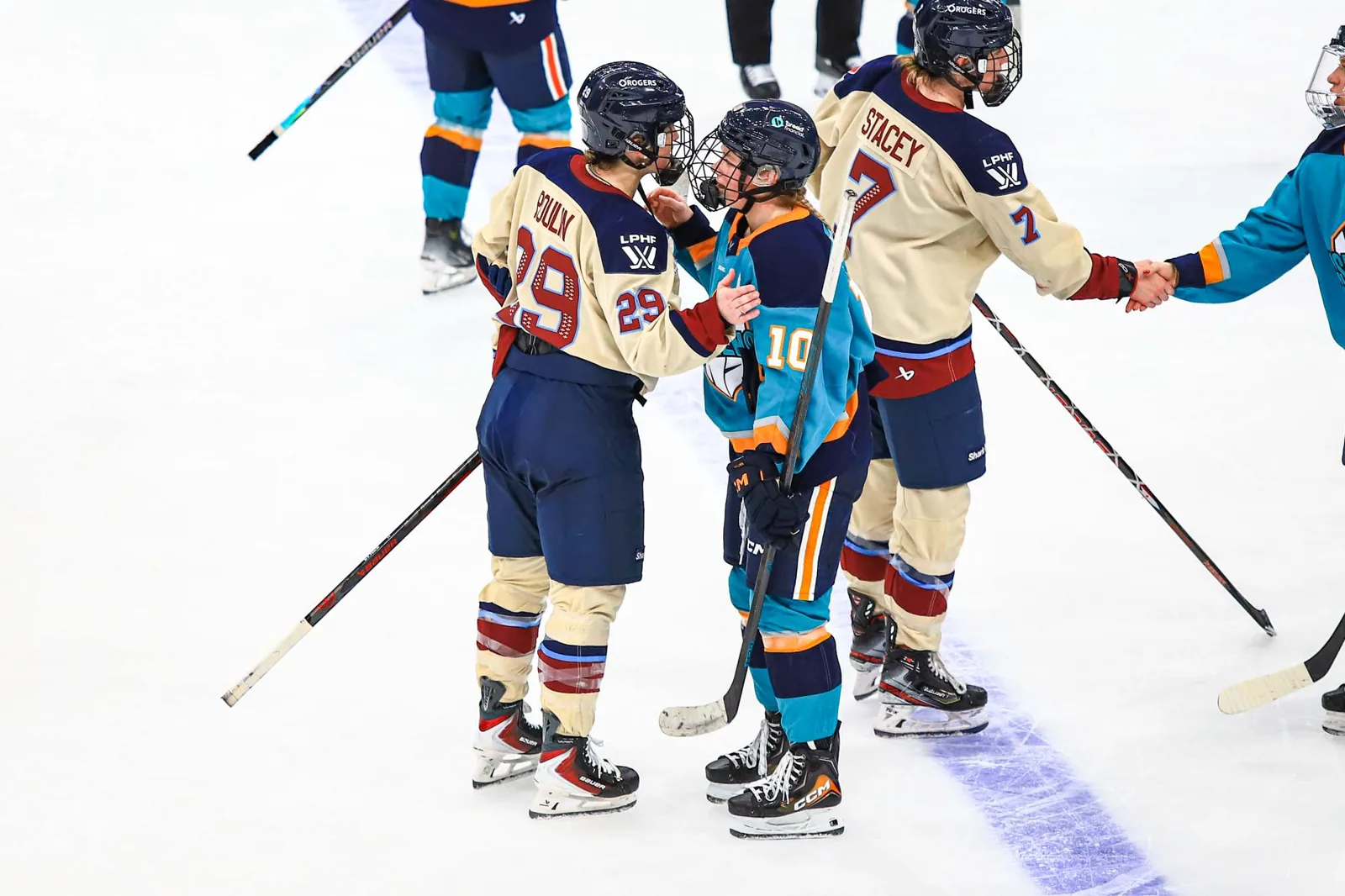
The freshly opened figures laid bare both extremes of player pay in the loop: a floor of $37,131.50 against a ceiling of $126,090. Stunning much of the women's-game audience, Marie-Phillip Poulin, who captains Montreal and is frequently celebrated as the finest to ever play the sport, ranked merely fifth in compensation at $110,216. Topping everyone was the Ottawa Charge's Emily Clark.
Worth a mention, Clark's earnings of $126,090 amount to only 14.8 percent of the NHL's established minimum for the 2026-27 campaign.
Highest earners in the circuit during 2025–2026
Ranked from the biggest paycheck down, the leading 10 shook out this way:
- Emily Clark — $126,090 — suiting up for the Ottawa Charge
- Sarah Fillier — $125,000 — with the Sirens of New York
- Brianne Jenner — $122,003 — a second member of Ottawa's Charge
- Abby Roque — $116,699 — playing for Montreal's Victoire
- Marie-Philip Poulin — $110,216 — also of the Victoire in Montreal
- Renata Fast — $106,090 — wearing Toronto Sceptres colors
- Hilary Knight — $106,090 — on the Seattle Torrent roster
- Gabrielle Hughes — $105,000 — a third skater off the Charge
- Megan Keller — $105,000 — representing the Boston Fleet
- Kendall Coyne Schofield — $100,785.50 — closing out the group with Minnesota's Frost
In all, a mere 10 skaters cleared the six-figure bar, three of those wearing Charge colors, while the remaining 184 under contract fell short. A group of 16 collect the baseline of $37,131.50, with a small number earning half a dollar beyond it ($37,132). Nearly two of every three players around the league take in below the $60,000 line.
Under the collective deal, each athlete additionally drew a monthly housing stipend totaling $1,700 for 2025-26, an amount climbing $100 with each passing year. Beyond that, players are afforded full medical coverage plus paid maternity time.
Diverging from the NHL along with the other big-time circuits, the present agreement imposes neither a maximum salary nor a cap. The requirement instead obliged each club to land at a mean base figure of $58,349.50 over this past year. Swings as large as 10 percent get permitted under the pact in order to cover trades and fresh additions, while that average climbs 3 percent annually. Since the existing pact stays in force until 2031, broad, across-the-board raises are mostly kept in check.
Even though the guide stops short of detailing a player's entire pay package, it renders earnings far more accessible than whatever the NHL offers. The NHL does publish the term and dollars of each signing through club announcements, yet never compiles that data on a single site nor provides any straightforward way to look it up. As a result, fans have shouldered the task on their own, and supporter-operated sites such as PuckPedia stand as the sole route to full salary listings.
One such fan-driven venture was Capgeek, a site Washington's NHL club bought in 2024 to use behind closed doors.
Gary Bettman tackled the topic head-on as far back as 2015 and seems to have held largely the same view since. As he framed it, salary details didn't strike him as a factor fueling the curiosity of supporters.
He further noted that managers do hold access to such figures, that the resources the league leans on for its own commercial work are of a different kind, and that nothing the NHL handles internally for those reasons inherently must be aired publicly or turned into a point of discussion.
On the question of pay disclosure, the PWHL adopts a stance starkly at odds with its NHL counterpart. Speaking via CBC, the union's top executive, Malaika Underwood, laid out the rationale, observing that the move reflects the body's belief that wider pay openness arms players with sharper detail and a stronger footing in their individual negotiations, all the while fostering a more open and credible market right across the loop.
She added that, since the players had already approved circulating those numbers among each other and their agents, and since the floor and average totals already appear within the bargaining pact, the step represented a sensible progression.