
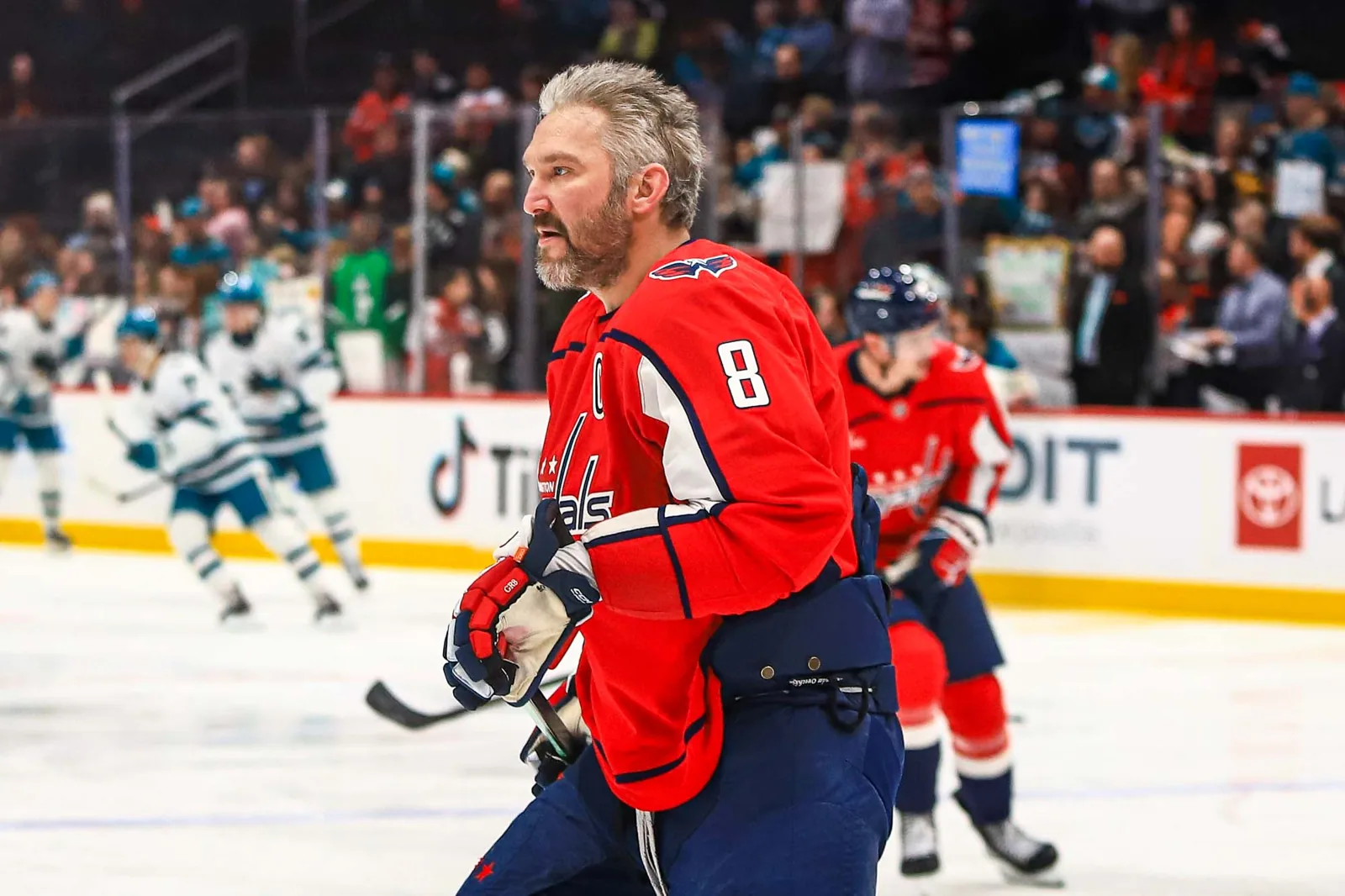
Sitting on 79 points in the standings, Washington faces long odds of qualifying for the playoffs. The current roster is tracking far short of the 2024-25 squad, which racked up 111 points to finish atop the East.
In a Russian-language conversation recorded for Fonbet's "FONtour NHL" and posted online March 20, Ovechkin fielded questions about why his club has fallen flat during the 2025-26 season. Joined by retired soccer star Andrey Arshavin and ex-NHLer Nikita Filatov, the captain laid out three main culprits behind the team's slide. The exchange is summarized below, based on a transcription published by sports.ru and run through Google Translate into English, and on the captain's own comments during that same exchange touching on the playoff format plus the league's approach to seeding.
Arshavin opened by noting that, twelve months earlier, the Capitals looked assured and led their division, yet with largely the same personnel the hockey now appears completely different, and he wondered what had changed.
Ovechkin pointed first to a major absence: center Pierre-Luc Dubois went down with an injury and was sidelined for roughly four months. The plan, he explained, had been to fill that hole with Lapierre, Sourdif, and McMichael, but the team's chemistry broke down right away as the staff scrambled to land on workable line combinations. When you skate alongside one regular linemate, he said, an instinctive understanding develops, whereas slotting in different partners makes things harder and forces newcomers to spend time learning the system, leaving that natural feel missing.
Filatov pushed back, acknowledging Dubois matters as the second-line pivot but arguing he can't be the sole explanation for a contender sinking into a scrap for a postseason berth, and he asked what else was at play.
Ovechkin's second answer was luck. Compare this season's numbers to last year's, he said, and it's clear the team was finding the net far more often back then; over the previous four contests, Washington had managed only about two goals a night.
When Filatov added that the issue extended beyond finishing to the quality of play itself, with the club sometimes unable to even establish itself in the offensive zone, Ovechkin closed with his third point: the power play. He conceded it was no secret the unit had been trailing the pack in that department.
Dubois, who ranked fourth on the team in scoring a year ago with 20 goals and 46 assists, sat out 52 games after suffering two distinct injuries early in the year. During the early part of November he had surgery on his adductor and abdominal muscles, then returned to the lineup last month. Washington has gone 7-5-2 since he rejoined the lineup February 5. Each member of the trio Ovechkin named — Sourdif, McMichael, and Lapierre — has found it tough to deliver on a nightly basis the way Dubois managed a year earlier.
On the scoring front, Washington's tally of 219 goals ranks a middling 17th this year, a steep drop from the 286 they piled up in 2024-25, which trailed only one team leaguewide. Ten contests remain, and the club is projected to finish 37 goals shy of that total. Their shooting touch has cooled dramatically as well: after leading the NHL at a 12.61 conversion rate last season, their finishing rate has dipped to a 20th-ranked 10.67 percent this time around.
The power play Ovechkin flagged sits at 16.4 percent, placing 30th among the 32 teams. The captain himself notched his first home power-play tally of the year versus Colorado this past Sunday, during the club's 71st outing of the campaign.
Asked point-blank whether a playoff push remained realistic, Ovechkin replied that sport is unpredictable. He went on to address how stacked the East has been this year and the way the NHL sets up its bracket.
Arshavin offered a final hockey thought, saying the method of choosing the eight qualifying teams struck him as odd and unfair. Ovechkin responded that Eastern clubs and Western clubs are judged separately even though some Western teams hold fewer points than Washington; he suspected plenty of general managers, and the league office too, were now puzzling over how a higher-point team can miss out while a lower-point team in another conference gets in. After Arshavin noted that within each conference the split is still eight and eight, Ovechkin cited Anaheim, Vegas, and Los Angeles as examples — Washington sits ahead of all of them in points yet is on the outside looking in, while those clubs remain in the hunt for a spot.
Filatov found the contrast striking, observing that here was Sasha lamenting the chase for a playoff berth, whereas Kaprizov had marveled that with a division on each side, the top three clubs stand well above the rest, to the point that the fourth-place team in one division can outrank the leader of another. Arshavin agreed that was true on points but said such a team can't break through because divisional slots are capped, and Filatov added that Kaprizov's path runs through the two toughest opponents in the opening two rounds.
Ovechkin recalled his own days as the No. 8 or No. 9 seed in some season he couldn't pin down, when the top seed faced No. 8 and the No. 2 seed met No. 7. Arshavin called that arrangement cooler and more sensible, and Ovechkin concurred, lamenting that the wild card had since been introduced; he'd rather stick with the traditional first-versus-eighth setup. When Filatov summed it up as doing it the classic way, Ovechkin agreed and asked what there was to reinvent.
Had Washington been placed out West, those 79 points would comfortably slot the team into the postseason field. Edmonton, second in the Pacific Division, also has 79 points, third-place Vegas sits at 78, and Nashville, currently occupying the second wild-card berth, holds 77.